


The email arrives, the listing is gone, and the first thing every search result tells you is to file a counter notice. So you go looking for the form, and you cannot find it. You are not missing it. For a trademark report, it is not there.
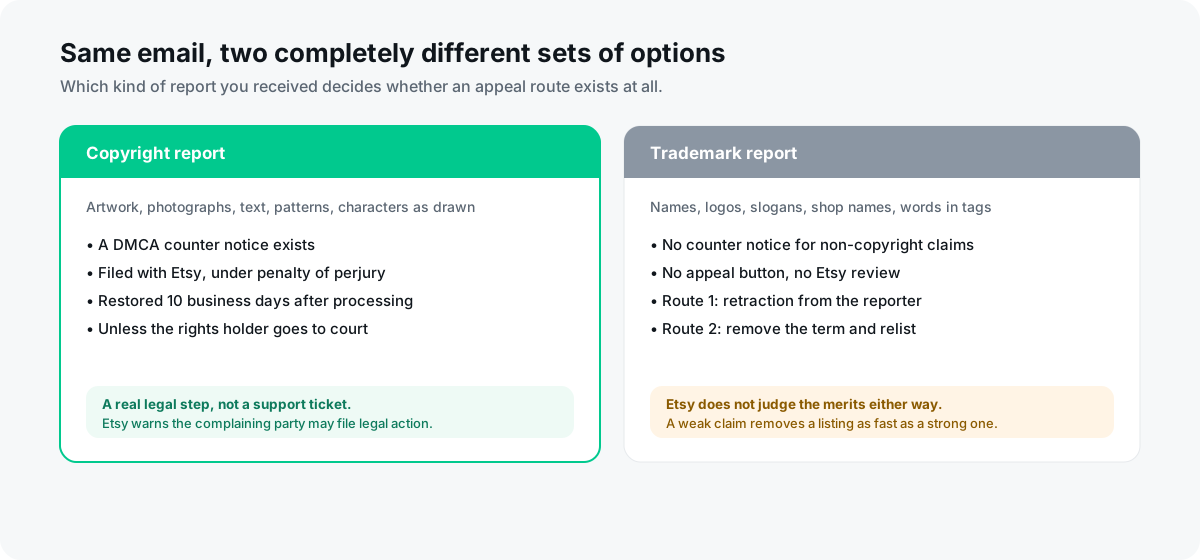
Etsy's own help page says it in one line: Etsy cannot accept counter notices for non-copyright claims. The counter notice is a creature of the Digital Millennium Copyright Act, which is a copyright statute. Trademark has no equivalent under that law, so Etsy has built no equivalent process. Most of the advice circulating about IP removals was written about copyright and then applied to trademark by people who did not notice the difference.
That difference is the whole article. What follows is what actually happens after a trademark report, why the usual moves fail, and the two routes that do work. Nothing here is legal advice, and Etsy revises these flows, so the instructions in your own notice always take priority over anything written here.
What Etsy does and does not do when a report arrives
The single most useful thing to understand is that Etsy is not the judge. It says so plainly in its Intellectual Property Policy: Etsy can't speak on behalf of intellectual property owners, nor is Etsy in a position to offer legal advice or make legal determinations whether a shop's content infringes someone else's intellectual property. The help page for sellers who receive a notice repeats it: Etsy does not make decisions about which listings infringe.
So the sequence is mechanical. A rights holder submits a report. Etsy removes or disables the listing. You get an email that includes the contact information of the party who filed it. Nobody at Etsy has assessed whether the claim is any good, which cuts both ways: a weak claim gets your listing removed just as fast as a strong one, and a strong defence does not get it back, because there is nobody at Etsy weighing defences.
This is why the instinct to write Etsy a long, careful explanation goes nowhere. It is a well-argued letter posted to an address where nobody is reading for argument.
Step one: find out which kind of report it actually was
Before anything else, read the notice for the word. Copyright and trademark arrive by the same route and look nearly identical in the inbox, and people routinely spend a week pursuing the wrong remedy because they never checked which one they got.
- Copyright covers creative work: artwork, photographs, illustrations, text, patterns, characters as drawn. If the complaint is about an image or a design, it is usually copyright.
- Trademark covers identifiers of source: names, logos, slogans, and sometimes shapes or colours. If the complaint is about a word in your title, your tags or your shop name, it is usually trademark.
- Patent covers how something works or, for design patents, how a product looks. Rare on Etsy but not unknown.
One removal can involve more than one. A listing using a well known character both draws the character and names it, which is a copyright claim and a trademark claim at the same time. In that case the copyright half has a counter notice route and the trademark half does not, and answering only the copyright half does not bring the listing back.
What the copyright route looks like, for contrast
It is worth knowing what you are not getting. For a US copyright report, you can file a counter notice containing your contact information and a statement under penalty of perjury that the removal was the result of a mistake or misidentification. If Etsy processes it and the rights holder does not go to court, you may relist the removed material 10 business days after Etsy processes your counter notice.
Etsy attaches a warning to that, and it deserves repeating rather than skipping: filing a counter notice is a serious matter that can have legal implications, and the complaining party may choose to file legal action against you. A counter notice hands the other side your contact details and a sworn statement. It is a real legal step, not a support ticket, and it is not the right reflex for a listing you were half unsure about anyway.
For a trademark report, none of that applies. There is no form, no ten day clock, and no restoration path inside Etsy.
Route one: a retraction from the party that filed
This is the route that actually works, and it is the one almost nobody tries, because it means contacting the person who just took your listing down. Etsy gives you their contact information for exactly this reason. If they tell Etsy they are withdrawing the report, the removal can be undone. If they do not, it cannot.
Retractions are more common than sellers expect, because a meaningful share of reports are automated or over-broad. Large brand protection operations run keyword sweeps and file in volume, and those sweeps catch listings that a human would not have flagged. A polite, short, specific message to a brand protection inbox is sometimes all it takes, particularly when your use was genuinely outside what the mark covers.
What that message should be: three or four sentences, no adjectives. Name the listing, state precisely what you have changed or why you believe the use falls outside their mark, and ask directly whether they would consider retracting the report with Etsy. What it should not be: an argument about fairness, a description of how much the shop matters to you, or anything that reads as a challenge. You are asking a legal department for a small administrative favour, and the tone that gets it is brisk and businesslike.
If they say no, or say nothing, accept that as the answer and move to route two. Repeatedly emailing a brand protection team is how a single listing report turns into attention on your whole shop.
Route two: change the listing and relist it
For most sellers this is the real answer. Trademark protects a name, not your product, so the great majority of flagged listings can be relisted with the offending words removed and nothing else changed. The item is usually fine. The words were the problem.
The critical part is that you have to know which word it was, and remove it everywhere, not just from the title.
- The title, including any part that got truncated in search results.
- All 13 tags. Tags are the most commonly missed hiding place, because they are not visible in the way a title is.
- The description, including the parts you paste in from a template.
- Attributes, variation names and personalisation prompts.
- The images themselves. A word rendered inside a mockup counts, and swapping the title while leaving the graphic in place gets the relisted version reported again.
- The shop name, shop sections and your About page, if that is where the term lives.
One warning that matters more than any other on this page: do not relist the same content while the dispute is unresolved and unchanged. A relist of the exact material that was just reported is what turns one report into a pattern, and a pattern is what costs shops their accounts.
The compatible-with question
The most common honest use of someone else's trademark is descriptive: a phone case for a particular model, a strap that fits a particular watch, a refill that suits a particular planner. Sellers ask whether that is allowed, and the general legal principle is that you may use a mark to describe what your product genuinely fits, provided you do not use it in a way that suggests the brand made or endorsed the item.
In practice the distinction is doing a lot of work and it is not a safe harbour on Etsy specifically, because the listing still gets removed first and argued about second. Etsy's own handbook draws the line the same way, noting that someone creating an item that looks a bit like yours is different from someone using your trademarked name in a misleading way. Where sellers get caught is putting the brand name at the front of the title for the search traffic, which is exactly the placement that starts to look like source rather than description.
Where this is going wrong for you is almost always position and repetition, not the mere presence of the word. Buried once at the end of a description, describing genuine compatibility, is a different listing to the same word leading the title and filling four tags.
The mistakes that turn one removal into a bigger problem
- Filing a copyright counter notice on a trademark report, hoping it goes through. It does not, and a sworn statement filed against the wrong kind of claim is a bad document to have created.
- Relisting unchanged, or relisting with the same words in the tags. The second report reads as deliberate.
- Opening a second shop to carry the flagged listings. Etsy's policy reserves the right to refuse all services to members it believes have opened new accounts after termination, and it links accounts by device, address, card and email.
- Arguing with Etsy support. They cannot lift a rights holder's report, and they have said so in the notice.
- Fixing only the one listing that was named. If the same term is in nine other listings, you have nine more reports queued up behind the first.
What one removal actually costs you
A single trademark removal is a bad afternoon. The listing goes, its reviews and its search history go with it, and if it was a seller you lose the ranking you had built. That is genuinely painful and it is also survivable.
The reason to take it seriously is what sits behind it. Etsy's Intellectual Property Policy states that Etsy terminates selling privileges of members who are subject to repeat or multiple notices of intellectual property infringement, in appropriate circumstances and at Etsy's discretion. The help page puts the same thing more softly: repeat reports of infringement may result in the loss of account privileges. Neither publishes a number, which is the part sellers hate, and which is also the point. There is no strike count to budget against.
So the honest framing is this. One report is a listing problem. The second and third reports are an account problem, and by then you are no longer fixing listings, you are trying to demonstrate a pattern has stopped. How that escalation works, and what it looks like from the inside, is covered in how trademark reports turn into a suspended Etsy shop.
The version of this that costs nothing
Every route above is worse than not being reported. After a removal you are negotiating from behind, with the listing already down and its history already gone. Before one, the same work is a search and a rewrite.
The awkward part is that you cannot do it by instinct, because the words that get shops reported are almost never the ones that look risky. Nobody puts a famous character in a title by accident. What gets flagged is an ordinary two-word phrase that somebody registered in your exact category, sitting in tag nine of forty listings, doing nothing for your traffic and quietly waiting. Checking a whole shop by hand means every title, every tag and every description against the register, and then working out for each hit whether the mark is live, whose it is, and whether it covers goods related to yours.
That is the job the Etsy trademark check does. Every title, tag and description screened against the marks that are actually enforced on Etsy, anything unfamiliar verified live against USPTO and TMview, and for each flagged listing a replacement title and 13 tag set written for it, so the fix is paste rather than research. It also lists what came back clear, which is the half people forget to ask for and the half that lets you stop worrying about the rest of the shop.
Check my shop before someone else does →Can I file a counter notice for a trademark removal on Etsy?
No. Etsy states that it cannot accept counter notices for non-copyright claims. The counter notice comes from the Digital Millennium Copyright Act, which is a copyright statute, so it applies only to copyright reports. A trademark removal has no equivalent form or appeal inside Etsy. The two routes that exist are a retraction from the party that filed the report, or changing the listing so it no longer contains the reported element.
How do I get my Etsy listing back after an IP complaint?
It depends on which kind of complaint it was. For a US copyright report you can file a DMCA counter notice, and if Etsy processes it and the rights holder does not go to court you may relist the material 10 business days later. For a trademark report there is no counter notice, so your options are to ask the reporting party to retract the report with Etsy, or to remove the reported words from the title, tags, description, attributes, images and shop name and relist.
Does Etsy decide whether my listing actually infringes?
No. Etsy states that it can't speak on behalf of intellectual property owners, nor is Etsy in a position to offer legal advice or make legal determinations about whether a shop's content infringes. It removes the listing on the report and gives you the contact information of the party who filed it. This means a weak claim removes your listing as effectively as a strong one, and it also means arguing the merits with Etsy support does not work.
Should I contact the company that reported my listing?
It is the only route that can restore the listing as it was, so usually yes, if you can be brief and specific. Etsy supplies their contact information for this reason. Keep it to three or four sentences: name the listing, state what you have changed or why you believe your use falls outside their mark, and ask directly whether they would retract the report with Etsy. If they decline or do not reply, change the listing instead and do not keep writing.
Can I relist the item after a trademark removal?
Usually yes, provided the reported element is gone. Trademark protects a name rather than your product, so the item itself is generally fine and the words were the problem. Remove the term from the title, all 13 tags, the description, attributes, variations, personalisation prompts, any text rendered inside your images, and the shop name if it appears there. Do not relist the same content unchanged while the dispute is open, because a repeat of the reported material is what escalates a listing issue into an account one.
Can I use a brand name to say my product is compatible with it?
The general principle is that you may use a mark to describe what your product genuinely fits, as long as you do not imply the brand made or endorsed the item. In practice on Etsy this is not a safe harbour, because the listing is removed first and discussed afterwards. What tends to trigger reports is placement rather than the word existing: the brand name leading the title and filling several tags reads as source, while one mention in the description describing real compatibility reads as description.
How many trademark complaints before Etsy suspends a shop?
Etsy does not publish a number. Its Intellectual Property Policy says it terminates selling privileges of members who are subject to repeat or multiple notices of infringement, in appropriate circumstances and at Etsy's discretion, and the seller help page says repeat reports may result in the loss of account privileges. Treat the absence of a published figure as a reason not to budget for a second one rather than as room to work with.
One caveat on all of the above: this reflects what Etsy publishes as of August 2026, and Etsy revises these policies and routes. The wording in your own notice, and on your own Policy violations page, governs your case. If the notice names a statute or an attorney and you are unsure what you are looking at, that is the point to talk to a lawyer rather than to a forum.