


Since the EU packaging regulation started applying on 12 August 2026, sellers have been told in roughly equal measure that their boxes are now illegal and that nothing has changed. Both are wrong, and the confusion is entirely because the regulation applies from one date while most of its actual requirements start on later ones.
The quick answer
- The regulation applies from 12 August 2026. That is the date the framework is live.
- The empty space limit is a maximum of 50% for grouped, transport and e-commerce packaging, and it applies from 1 January 2030.
- The method for calculating that empty space ratio is not even finalised yet. The Commission has until 12 February 2028 to establish it.
- The harmonised sorting labels arrive later still, tied to implementing acts, no earlier than 12 August 2028.
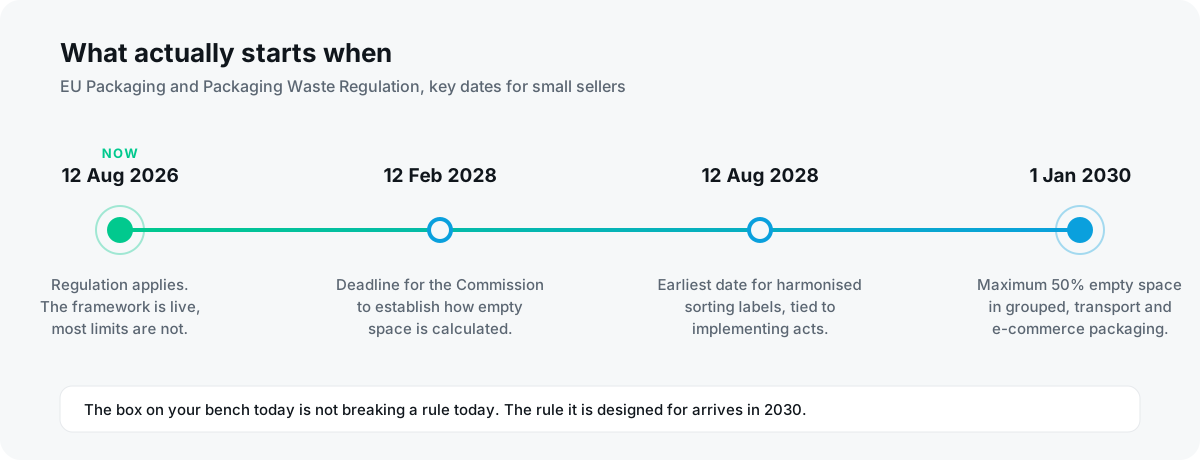
So if you are posting a necklace in a box with four handfuls of shredded paper today, you are not breaking a rule today. You are, however, doing the exact thing the rule is designed to stop, and 2030 is closer than it sounds when it involves changing your packaging supply.
What the empty space rule means in practice
The cap is on the ratio of empty space inside the packaging around the product. At 50%, the intent is straightforward: the box should be roughly sized to the thing inside it. Void fill used to make an oversized box safe counts as the problem, not the solution.
The honest caveat is that the calculation methodology is still being written. Whether protective material counts as empty space, how irregular handmade objects are measured, and how a bundle of small items in one parcel is treated are all questions the implementing act will answer. Anyone giving you a precise compliance figure for your specific box today is guessing.
The part that applies to handmade sellers more than they expect
There is a separate strand of the regulation on packaging minimisation: packaging has to be designed to the minimum volume and weight necessary for function, with a limited list of legitimate reasons for going beyond it, such as protection, hygiene, safety and consumer acceptance.
Protection is a real and accepted reason. A fragile ceramic genuinely needs space around it, and the rules are not written to force you to break your own stock in transit. What they are written to stop is the default habit of buying one box size and filling the gap.
What is actually worth doing now
- Count your box sizes. Most small shops use one or two. Three or four well-chosen sizes eliminates most void fill and usually reduces postage at the same time.
- Weigh a typical parcel before and after a size change. Packaging reduction and shipping cost reduction point in the same direction, which makes this the rare compliance step that pays for itself.
- Switch void fill toward materials you can identify and document. Paper-based fill is easier to describe under every one of these schemes than mixed-material alternatives.
- Keep the supplier information for your packaging. Every direction this regulation moves involves being able to say what your packaging is made of.
- Do not rebuy your entire packaging stock this year on the strength of a rule that starts in 2030 with a calculation method that does not exist yet.
Where this sits next to EPR
These are different obligations and people keep merging them. The packaging regulation governs how your packaging is designed. EPR governs registering and paying for the waste that packaging becomes, country by country. Sizing your box perfectly does not register you anywhere, and registering does not exempt your box from the design rules.
Is the 50% empty space rule in force now?
No. The packaging regulation applies from 12 August 2026, but the maximum 50% empty space ratio for grouped, transport and e-commerce packaging applies from 1 January 2030.
How is empty space measured?
The calculation methodology has not been established yet. The Commission has until 12 February 2028 to set it out in an implementing act, which is why no one can give you a definitive figure for your own packaging today.
Does protective padding count as empty space?
That is one of the details the methodology still has to settle. The regulation does recognise protection as a legitimate reason for packaging volume, so genuinely necessary protection for fragile items is not the target of the rule.
When do the new packaging labels start?
The harmonised labelling requirements are tied to Commission implementing acts and take effect no earlier than 12 August 2028, on a timeline of 24 months from those acts entering into force.
Do these rules apply to sellers outside the EU?
They apply based on where the buyer is. If you post packaged goods to a buyer in the EU, the packaging placed on that market is in scope, regardless of where your shop is based.
One caveat worth stating plainly: this is a plain-language summary to help you know what to ask about, not legal advice, and parts of it are still being clarified by the Commission. If EU buyers are a meaningful share of your revenue, treat this as the start of a conversation with someone qualified rather than the end of one.
Read the wider EU rules overview for Etsy sellers →